I recently read Less by Patrick Grant. It has given me pause to reconsider my relationship with the objects I keep in my house. So much of what passes through our hands is disposable. On a hot June afternoon, I walked around my house and created a small collection of objects I can hold in my hand which have gained a permanance in my life through their tangible and intangible qualities.

Cricket ball
This is, by all accounts, not the most expensive cricket ball but it feels excellent to hold. I keep it in my desk draw and roll it around in my hands when I am impatiently waiting for something. It thuds pleasingly against the skin.
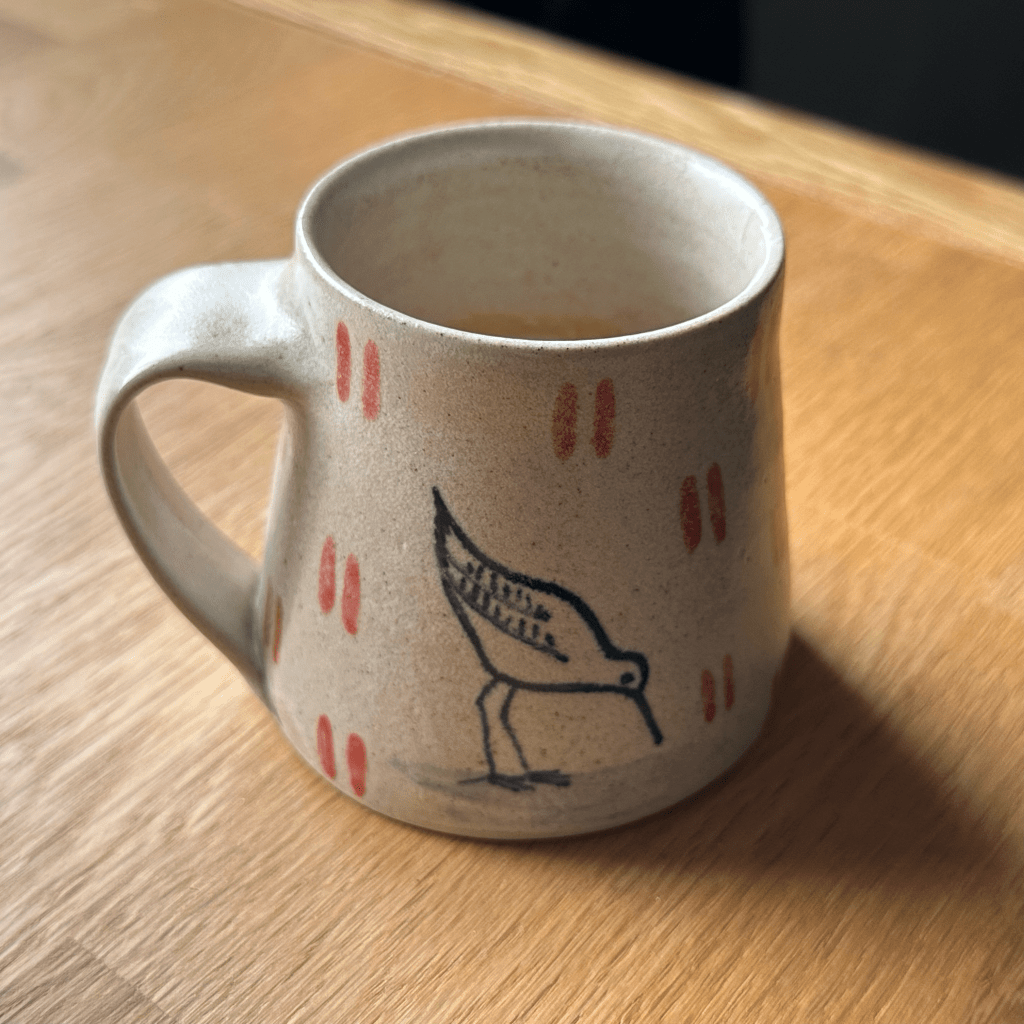
Sandpiper mug
This was made by Rose Brettingham and it was one of the first objects I purchased after I moved to Norwich. I drink coffee from it every day, it feels organic and smooth. The sandpiper has become my morning companion.

Desk calendar
I have had this on my desk for over a decade. In periods of stress I forget to press the button that flicks over the days so it records the last day on which I felt calm and content.

Edward VIII mug
I have a small collection of Edward VIII coronation memorabilia. It was, of course, the coronation that never happened and I find the existence of this mug to be gently humourous. A good reminder that no thing is certain.

Pencil sharpener
I puchased this in a stationery shop in Germany somewhere, possibly Hamburg. It is made from thick, solid plastic and is a mundane marvel of form and function.

Corner tool
This tool solved a very specific problem I have when I make models. It allows me to line up the corners of a building in a perfect ninety degree angle. It is a simple thing but it feels heavy and weighs down my box of model making tools.

Candle
To sit in the bath, in the dark, with a candle burning in the corner of the room is a great joy. This one smells of fresh green, it is nearly exhausted now but I will enjoy the last few hours it has to offer.

Beard brush
If you are going to use something every day then thought should be given to it. I went through several cheap brushes before I found this in Jarrolds. It was expensive but it sits well in the hand and performs its function well.

Balsam fir incense
I bought this in Maine. I burn it whenever I clean my bedroom and it reminds me of the pine forests I saw out of the train window on the Downeaster. I know I could buy more online but this pack is being rationed as it has Mainer provenance.

Tiny Kwik Save
After I gave up social media, I knew I needed to replace the time spent scrolling with something. This is a talisman of that decision as making these tiny models of a 1990s high street was one of the first projects I worked on post-algorithim.

Wooden pylon
This was made by my husband to hold up the second tier of our wedding cake. It is an object that embodies the care he has shown in our marriage and in his craft. When I hold it, I feel our marriage in it.
Appendix: Tangible and Intangible Qualities from Less by Patrick Grant
Tangible or objective quality is relatively simple to understand. Is the object’s form well suited to its function, is it simple and pleasurable to use, will it perform its function well under all conditions and circumstances, and will it continue to perform its function to the same level of quality for a long time? Objective quality comes from the quality of design, the physical characteristics of the materials from which the object has been made, and the process, the skill and the tools or equipment used to produce it.
The second side to quality is subjective: the intangible aspects of an object’s character, less easy to pin down but of real importance, particularly in a world longing for connections to humanity and nature. How do I feel about this object? What do I know of its character, and its provenance? Where were the materials from which it has been made sourced? How have they been grown and felled and brought together? Who has made the object, and in what workplace? What is the maker’s story, from whom did they learn their craft? If it has been made in a factory, what history does that factory have? What particular assets or access to material used in the manufacture of this product make it unique? What, in short, is its story?

